

Wednesday
Çiğköftecisi Orhan Usta: Hot Stuff
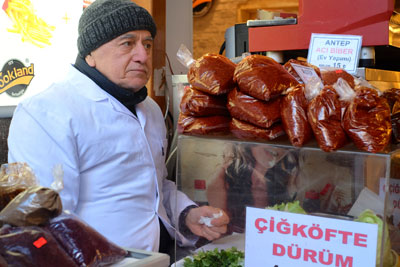
Visitors to Istanbul’s iconic Spice Bazaar encounter a place packed wall-to-wall with overzealous shopkeepers selling everything from saffron to sumac assembled in rows of majestic pyramids at slightly inflated prices.
But for our money, the only spices worth a damn are found just outside in a humbler setting. Crammed behind a tiny kiosk perched in front of a fast-food restaurant that flanks one of the bazaar’s entrances is the endearing Orhan usta. The loveable 65-year-old is a veritable master of çig köfte and a connoisseur of the spicy red pepper flakes cultivated in his hometown of Gaziantep, the southeastern city considered by many to be Turkey’s culinary capital.
While it’s traditionally made of raw meat (çig köfte translates to “raw meatball”), the versions found around Istanbul are typically vegetarian, a mix of bulgur wheat, tomato paste, pureed potato and, in Orhan usta’s version, a healthy dose of fiery Antep red pepper.
Read the rest of the review at Culinary Backstreets.

In case you didn’t know, Istanbul Eats now lives over at Culinary Backstreets. Same great culinary walks, same great culinary writing. You’ll be redirected there in a few seconds!


-
-
-
-
Quick Look
Recent Posts
-
Hanging On to History: Edible Nostalgia in Samatya
no responses - Posted 05.08.18
That much of the past seems to stick to Samatya is a marvel in Istanbul, a city being rebuilt and “restored” at an alarming pace. First, there’s the question of its name. Occupying a stretch of the Marmara Sea and squeezed between the old city walls and Kumkapı, an area home to a rotating cast of eclectic restaurants, the neighborhood still ... continue -
Spring Surprises: Skewering the First Fruits in Istanbul
no responses - Posted 04.25.18
It was the first of April and an absolutely pristine Istanbul spring day, the kind where one can break a slight sweat walking up a hill then catch a cool breeze in a nearby patch of shade. Returning to the city from a lovely weekend on Büyükada, we were smitten with spring and wanted to indulge in its finest offerings. In ... continue -
Farewell, Pando: An Istanbul Culinary Legend Passes On
no responses - Posted 04.16.18
It’s Saturday around lunchtime and business as usual in the bustling Beşiktaş Çarşı neighborhood, as crowds of mostly younger people fill the narrow streets. Down on Mumcu Bakkal Sokak, a pedestrian-only street lined with miniscule shops, a line around the block has been formed by those eager to get into one of the city’s best döner spots. For many of those ... continue -
Bağdat Ocakbaşı: Licensed to Grill
no responses - Posted 04.09.18
Istanbul’s T1 tramway is relatively pleasant if you can find a seat, but borders on unbearable if you are on your feet. Back in 2015, we wrote about a trip we took from the line’s first stop all the way to one of its last, which lies way out in the district of Güngören. By the time the tram has made ... continue -
Dose & Istos Café: Greek Revival
no responses - Posted 03.30.18
A café at its best is so much more than the sum of its parts: it’s a place where people can easily mingle, share ideas, and dertleşmek, or commiserate over their troubles, all while imbibing caffeine. At the same time, it’s a place where visitors might feel an invisible thread of common beliefs connecting them, an unspoken camaraderie, even if ... continue -
Back to the Land: Urban Turks Tackle Rural Life
no responses - Posted 03.23.18
When Buket Ulukut first moved from Istanbul to a rural plot of land in the foothills of the Taurus Mountains in southern Turkey, she was leading a double life. “I’d be taking calls from clients in Europe while out amidst the rows of peppers and eggplants, hoping they didn’t hear the rooster crowing in the background,” says Ulukut, who worked in ... continue -
Semt Pazarları, Civic Life Perfected
no responses - Posted 03.09.18
“Two kilos five liraaa! Two kilos five liraaa!” bellowed a young and exuberant vendor of tomatoes to the ongoing stream of frugal-minded shoppers making their way through the snaking Tarlabaşı Sunday Market. Hundreds of sellers of fresh produce, dairy, seafood, kitchenware, clothing, smuggled tobacco, jewelry, fresh baked goods and numerous other items set up side by side in the central Istanbul ... continue
Tags
- Advice Aksaray alcohol served Arnavutköy Asian side baklava beans Beyoğlu Beşiktaş Black Sea cuisine Bosphorus breakfast dessert dumplings Eminönü esnaf lokantası Fatih fish Grand Bazaar grill hamsi Istanbul Eats Istanbul restaurants Kadıköy Karaköy kaymak kebab köfte künefe liver mantı meyhane meze milk puddings News out of town places with a view seafood Southeastern cuisine specialty foods street food Taksim traditional foods Turkish wine vegetarian
-
Hanging On to History: Edible Nostalgia in Samatya
All entries filed under this archive
no responses - Posted 07.16.15
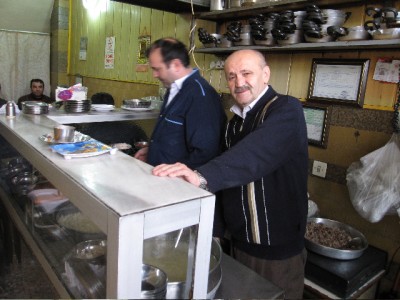
Ali Bey, the owner of a cubby-sized restaurant in Küçük Pazarı called Kısmet, sounded a bit like Bubba Gump listing the items on his menu: “We've got chicken soup, fried chicken gizzards, shredded chicken breast, dark chicken meat too, chicken and rice, chicken with onions and peppers, and chicken breast ...continue
no responses - Posted 02.25.13
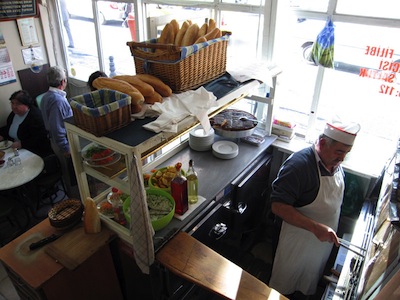
Where we come from, flipping burgers is a time-honored tradition among pimply teenagers looking for a summer job and troubled short-order cooks looking for a place to land in between firings. It’s work that promises mobility, not stability. But don’t tell that to Ziver Usta, who’s been turning the köfte – ...continue
no responses - Posted 12.31.12
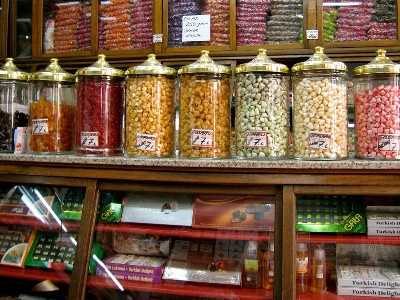
Just up the Golden Horn from the Egyptian Spice Bazaar is Küçük Pazarı, a rarely explored warren of market streets and Ottoman-era caravanserais that are home to scissors sharpeners, saddle shops, vendors selling axle grease (by the vat) and purveyors of axes. From this potpourri of run-down yet extremely photogenic ...continue
5 responses - Posted 01.11.12
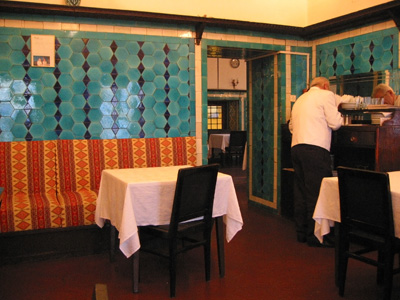
Dear Istanbul Eats, I've heard and read so much about the historic Pandeli restaurant in Eminönü's Spice Bazaar, including that it's nothing more than an overpriced tourist trap. Have you been there recently? Is it worth going to? Concerned in Cincinnati Dear Concerned, Thanks for the great question. Pandeli is indeed a venerable spot ...continue
2 responses - Posted 11.26.10
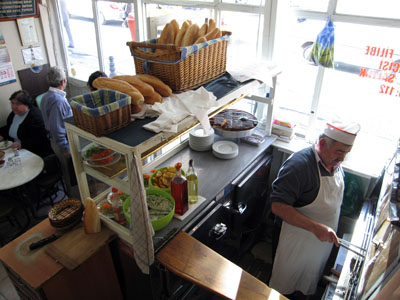
Where we come from, flipping burgers is a time-honored tradition among pimply teenagers looking for a summer job and troubled short-order cooks looking for a place to land in between firings. It’s work that promises mobility, not stability. But don’t tell that to Ziver Usta, who’s been turning the köfte – ...continue
1 response - Posted 03.29.10
Ali Bey, the owner of a cubby-sized restaurant in Küçük Pazarı called Kısmet, sounded a bit like Bubba Gump listing the items on his menu: “Weve got chicken soup, fried chicken gizzards, shredded chicken breast, dark chicken meat too, chicken and rice, chicken with onions and peppers, and chicken breast ...continue
19 responses - Posted 08.03.09
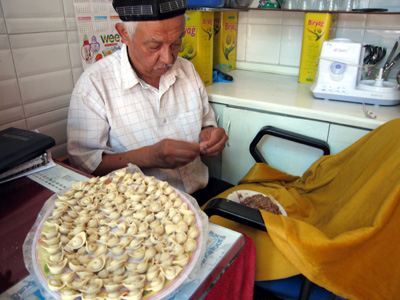
Editor's note: The Ottoman-era building that houses this restaurant is currently undergoing restoration, which means that the restaurant is closed for now. According to one of its owners, the restoration work will be completed next summer and the restaurant will reopen with a new and improved kitchen. With the particularly un-catchy ...continue
1 response - Posted 07.17.09
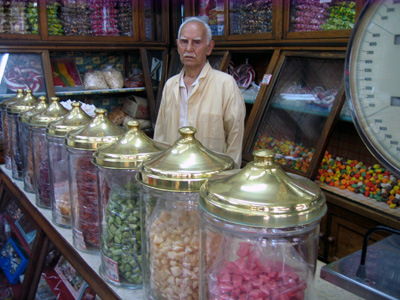
Just up the Golden Horn from the Egyptian Spice Bazaar is Küçük Pazarı – a rarely explored warren of market streets and Ottoman-era caravanserais that are home to scissor sharpeners, saddle shops, vendors selling axle grease (by the vat) and purveyors of axes. From this potpourri of run-down, yet extremely ...continue
14 responses - Posted 06.19.09
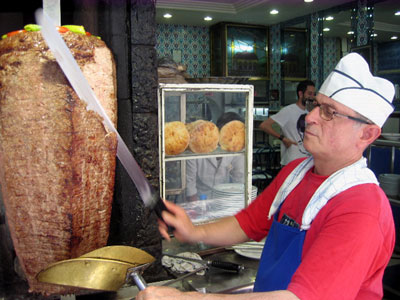
(Editor's Note: Due to a number of reliable reports that things are slipping over at this formerly recommendable spot, we are now urging diners to approach the restaurant with lowered expectations. We will update this alert if we hear or taste otherwise.) Though İskender kebap is a registered trademark of the ...continue
 |
Plan your perfect stay with reviews about Istanbul hotels from 
|
|---|